Selecting the right braking system is one of the most critical decisions for any cyclist, whether they are commuting through city traffic or descending a mountain trail. Understanding the various bicycle brake types is not just about performance; it is fundamentally about safety, control, and the ability to react instantaneously to unpredictable road conditions.
From the simple mechanics of rim brakes to the high-performance hydraulic systems found on modern racing bikes, each technology offers a unique balance of stopping power, weight, and maintenance requirements. As the global shift toward sustainable urban mobility accelerates, the demand for reliable and efficient braking solutions has grown, driving innovation in materials and engineering across the bicycle manufacturing industry.
By exploring the technical nuances of different bicycle brake types, riders can optimize their cycling experience, ensuring that their equipment matches their riding style and environment. Whether you prioritize low-cost maintenance or maximum stopping power in the rain, the right choice in braking technology ensures every journey ends safely.
Global Relevance of Braking Technology
On a global scale, the evolution of bicycle brake types reflects the broader movement toward safer, more efficient transport. According to World Health Organization data, improving bicycle safety infrastructure and equipment is paramount in reducing road traffic injuries. In densely populated cities across Asia and Europe, the shift from basic caliper brakes to more robust disc systems has significantly reduced accident rates in wet weather, where traditional rim brakes often fail to provide sufficient friction.
The industrial challenge lies in creating a standardized braking system that remains affordable for developing nations while meeting the rigorous ISO safety standards. As bicycles transition from simple leisure tools to primary commuting vehicles, the engineering behind how a bike stops has become as important as how it moves.
Defining Modern Bicycle Brake Types
In simple terms, bicycle brake types refer to the various mechanical and hydraulic systems designed to decelerate a bicycle by converting kinetic energy into thermal energy through friction. This is typically achieved by pressing a brake pad against a rotating surface, such as the wheel rim or a dedicated metal rotor.
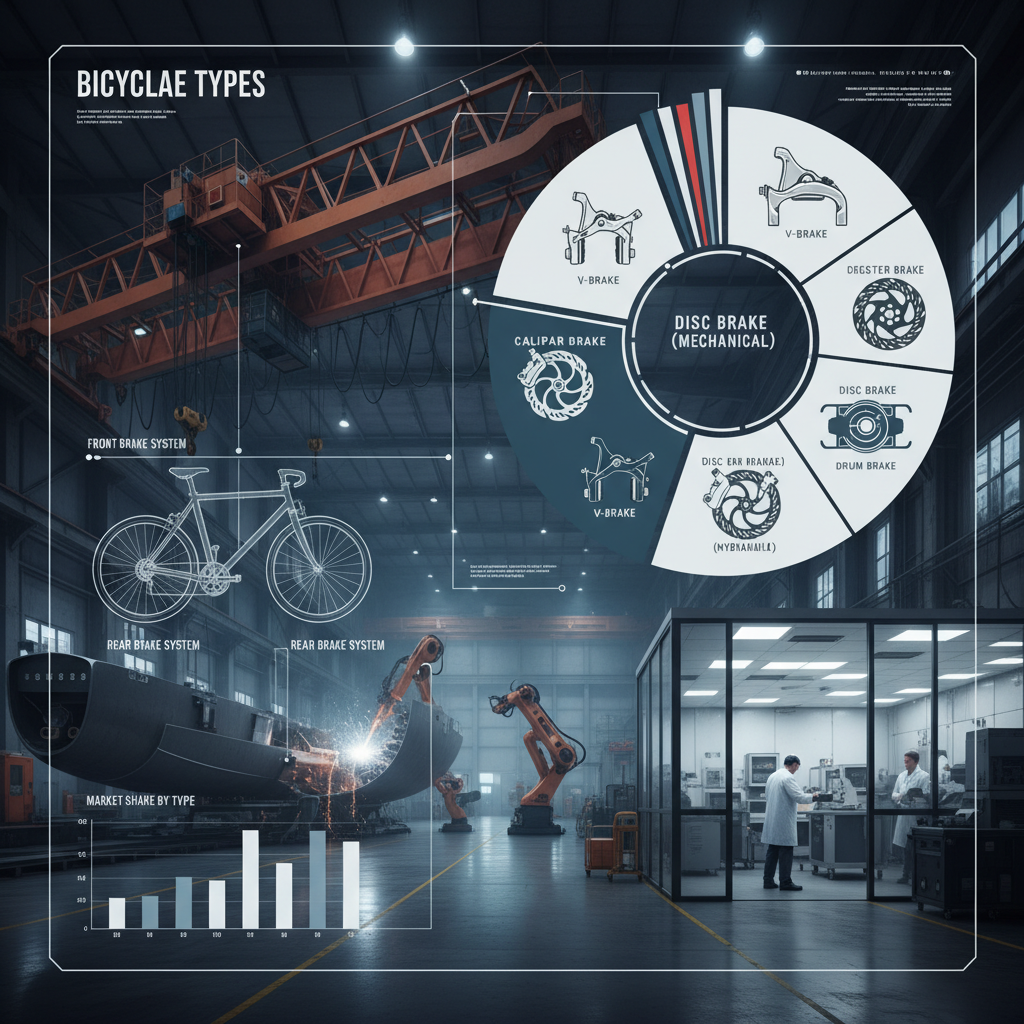
From an industry perspective, these systems are categorized primarily into rim brakes (V-brakes, caliper brakes, and cantilever brakes) and disc brakes (mechanical and hydraulic). Each type serves a specific purpose; for instance, rim brakes are prized for their lightness in road racing, while disc brakes are the gold standard for mountain biking due to their consistency in mud and rain.
Beyond mere technicality, the definition of braking systems now extends to humanitarian needs. In remote industrial zones or post-disaster relief areas, the simplicity of certain bicycle brake types—such as coaster brakes—is invaluable because they require minimal maintenance and fewer replacement parts, ensuring mobility remains reliable under harsh conditions.
Core Components of Stopping Power
The effectiveness of different bicycle brake types depends heavily on Durability. High-quality brake pads made from sintered metals or organic compounds determine how long a system can operate before requiring service. In heavy-duty applications, the resistance to heat fade is the primary metric for durability.
Another critical factor is Modulation, which refers to the rider's ability to control the braking force precisely. Superior bicycle brake types, particularly hydraulic disc systems, allow for "one-finger braking," meaning the rider can apply a gradual stop without locking the wheels, which is essential for maintaining traction on loose gravel or slippery pavement.
Finally, Cost Efficiency and Weight play a pivotal role in commercial design. While hydraulic systems offer peak performance, mechanical rim brakes remain the most cost-effective solution for entry-level city bikes and children's tricycles. Balancing these components allows manufacturers to tailor products to specific market segments, from professional athletes to casual commuters.
Performance Comparison of Braking Systems
When analyzing bicycle brake types, we must consider how they perform across different terrains. Rim brakes are exceptionally efficient on dry, paved roads where weight reduction is the primary goal. However, their performance drops significantly when the rim becomes wet or worn, as the friction surface is shared with the tire's structural support.
Disc brakes, by contrast, move the braking surface to a dedicated rotor at the hub. This separation prevents rim wear and ensures that braking power remains constant regardless of weather. The transition to disc brakes in the industry has been driven by the need for higher reliability in extreme environments, such as steep mountain descents or rainy urban commutes.
Performance Rating of Various Bicycle Brake Types
Real-World Applications and Use Cases
In the professional racing circuit, specifically in road cycling, lightweight bicycle brake types like dual-pivot calipers are preferred for their aerodynamic profile and minimal weight. These systems allow riders to maintain high speeds and execute precise maneuvers during a sprint, where every gram of weight saved translates into a competitive advantage.
Conversely, in the realm of urban logistics and courier services, hydraulic disc brakes have become indispensable. Couriers navigating rain-slicked streets in cities like London or Seattle require a braking system that does not lose efficacy after ten minutes of exposure to water. Similarly, for kids' electric motorcycles and tricycles, simpler, more durable braking mechanisms are utilized to ensure a safe learning curve for young riders without requiring complex maintenance.
Long-Term Value and Safety Reliability
The long-term value of choosing high-quality bicycle brake types extends beyond the immediate purchase price. While a hydraulic system may have a higher upfront cost, the reduced wear on the wheel rims and the increased safety margin provide a better return on investment over the life of the bicycle. This reliability fosters a sense of trust and dignity for the rider, knowing that their equipment will not fail during a critical emergency.
From a sustainability angle, modern braking systems are being designed for easier recyclability. The shift toward using standardized rotor sizes and biodegradable brake pad compounds reduces the environmental footprint of the manufacturing process. This alignment with "green" industrial policies ensures that the bicycle remains the most eco-friendly transport option globally.
Moreover, the social impact of reliable braking cannot be overstated. In many parts of the world, the bicycle is a tool for economic empowerment. Providing affordable, high-reliability braking systems to these populations ensures that workers can transport goods safely, reducing the risk of injury and loss of income due to mechanical failure.
Future Innovations in Brake Engineering
The future of bicycle brake types is leaning heavily toward digital integration and advanced material science. We are seeing the emergence of "smart brakes" that can integrate with electronic shifting systems to provide automatic braking assistance or regenerative braking in e-bikes, which feeds energy back into the battery during deceleration.
Ceramic rotors and carbon-fiber reinforced pads are moving from high-end aerospace applications into the cycling world. These materials offer virtually zero fade under extreme heat and significantly longer lifespans, though the current challenge remains making these technologies affordable for the mass market.
Automation is also playing a role in the manufacturing process. Precision CNC machining and 3D printing are allowing for the creation of brake calipers with organic shapes that optimize strength-to-weight ratios, reducing material waste and improving overall performance.
Technical Analysis of Future Braking Trends
|
Technology Type
|
Primary Material
|
Expected Efficiency
|
Market Adoption Rate
|
| Regenerative E-Brake |
Magnetic/Electronic |
High (Energy Recovery) |
Medium-High |
| Ceramic Disc |
Carbon-Ceramic |
Extreme Heat Resistance |
Low (Premium) |
| Smart-Adaptive Brake |
Sensor-Integrated Alu |
High (Auto-Modulated) |
Emerging |
| Bio-Composite Pads |
Organic Plant-Fiber |
Standard (Eco-Friendly) |
High |
| Titanium Rotors |
Grade 5 Titanium |
Ultra-Low Wear |
Low |
| Hybrid Cable-Hydraulic |
Steel/Mineral Oil |
Medium-High |
Medium |
FAQS
Hydraulic disc brakes are undoubtedly the best choice for rainy conditions. Unlike rim brakes, which rely on the wheel rim (which gets wet and slippery), disc brakes use a dedicated rotor that sheds water more effectively. This ensures consistent stopping power and shorter braking distances, which is critical for safety in urban traffic during inclement weather.
Yes, rim brakes remain highly relevant for specific use cases. They are lighter and easier to maintain than disc brakes, making them a preferred choice for weight-conscious road cyclists and for those using bicycles in dry climates. For casual city riding or children's bikes, they provide a cost-effective and reliable solution that is easy to repair at home.
The primary difference is the medium used to transfer force. Mechanical disc brakes use a steel cable to pull the brake pads, while hydraulic brakes use a fluid (mineral oil or DOT fluid) pushed through a hose. Hydraulics provide significantly more leverage, better modulation, and require less finger effort to achieve a full stop, though they require more complex "bleeding" maintenance.
Replacement intervals depend on the bicycle brake types and riding conditions. For rim brakes, check for wear grooves in the pads every 500-1,000 miles. For disc brakes, replace pads when the friction material is thinner than 1mm. Muddy or sandy conditions accelerate wear, so frequent visual inspections are recommended for mountain bikers.
In most cases, it is not a simple upgrade. Disc brakes require specific frame and fork mounts (tabs) and hubs that can accommodate a rotor. If your frame lacks these mounts, you would need to replace the frame, fork, and wheelset. It is usually more cost-effective to purchase a bike designed for disc brakes than to attempt a full conversion.
Coaster brakes are internal gear brakes activated by pedaling backward. They are extremely durable and protected from the elements, making them ideal for beach cruisers, children's bikes, and utility bikes in developing regions. They are best for riders who prefer a clean look without cables and don't require the high-performance stopping power needed for mountain or road racing.
Conclusion
Understanding the various bicycle brake types is essential for maximizing both the performance and the safety of any ride. From the lightweight efficiency of rim brakes to the uncompromising power of hydraulic discs, the choice of braking system should be dictated by the environment, the rider's technical needs, and the intended use of the bicycle. By balancing durability, modulation, and cost, cyclists can ensure they have the control necessary to navigate the world safely.
As we look toward the future, the integration of smart technology and sustainable materials will continue to redefine how we stop. Whether you are a manufacturer seeking the best components or a rider upgrading your gear, prioritizing high-quality braking solutions is an investment in long-term reliability and peace of mind. For more professional insights and high-quality bicycle components, we invite you to explore our full range. Visit our website: www.ikia-tanda.com