Ah, the joy of seeing your little one take those first tentative steps! It's a milestone every parent eagerly anticipates, and for many, a baby walker seems like a natural companion on that journey. Now, to be honest, walkers have had their share of debate over the years, with safety concerns often popping up. But, like many baby products, they've evolved quite a bit, becoming safer and more feature-rich.
Evolving Safety & Design: What's New?
If you've been in the parenting game for a while, you'll remember a time when walkers were, shall we say, a bit less regulated. Thankfully, industry trends have pushed for much stricter safety standards. Today's baby walker designs often include wider bases to prevent tipping, speed-reducing friction strips, and even height adjustability to ensure proper fit as your infant grows. It's all about making sure that while babies are exploring, they're doing so in a secure environment.
Spotlight: The Rotating Baby Walker with Record
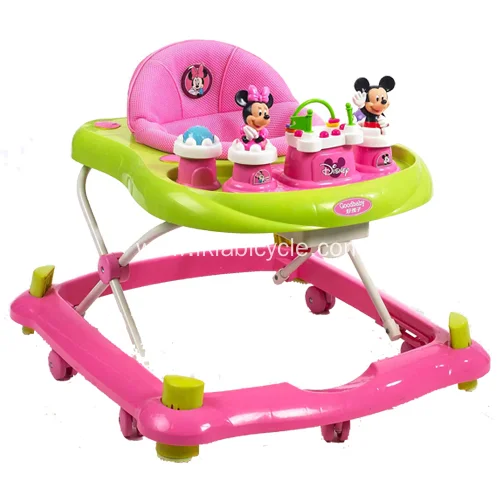
Let's talk about a specific type, like the "Rotating Baby Walker with Record." This isn't just your standard infant walker with wheels; it brings in elements of fun and engagement. From what I've seen, these models focus on a robust build and, interestingly, often include a rotating wheel base for easier maneuverability and integrated musical features (the 'record' part, I guess, meaning pre-recorded sounds or music). Many customers say that the combination of strong materials and comfort makes a real difference.
Key Specifications
Feature | Detail |
Product Name | Rotating Baby Walker with Record |
Materials | High-grade PP Plastic, Steel/Aluminum Alloy tubing (BPA-free) |
Key Features | Rotating wheel design, multi-directional wheels, activity tray (potentially with record/music), adjustable height, anti-tip base |
Safety Standards | Meets ASTM F977 (US) and EN 1273 (EU) or equivalent |
Weight Capacity | Up to ≈ 12 kg (26 lbs) or pre-walking stage |
Service Life | Around 2-3 years of active use, proper maintenance extends life |
The Nitty-Gritty: Manufacturing & Quality Assurance
When we talk about the "process flow" for a baby walker, it's pretty meticulous. It starts with selecting high-grade, non-toxic materials, typically robust PP (Polypropylene) plastic for the tray and base, and often a steel or aluminum alloy for the frame, ensuring stability. Methods involve precision injection molding for plastic components, careful welding or riveting for metal parts, and then assembly. Each batch usually undergoes rigorous testing. This includes stability tests (no tipping!), impact resistance, material safety (BPA-free is a must), and wheel durability. Compliance with international standards like ASTM F977 and EN 1273 isn't just a suggestion; it's a critical certification for entry into most markets. This focus on quality means a typical walker, if well-maintained, offers a solid service life until your little one has truly mastered walking on their own.
Usage Scenarios & The "Why" for Parents
Parents often look at a baby push toy walker or an infant walker with wheels for a few key reasons. Firstly, it offers a contained, safe space for babies who are eager to move but aren't quite ready to walk independently. It provides entertainment, too, especially those with activity trays – essentially a mobile play center. Secondly, for busy parents, it offers a bit of hands-free time, knowing their baby is safely engaged nearby. While pediatric advice often stresses that walkers shouldn't replace tummy time or floor play, used judiciously and under strict supervision, they can be a useful tool. Actual customer feedback often highlights the convenience, portability, and the sheer delight of watching their baby "zoom" around the living room.
Choosing Your Walker: Vendor Comparison & Customization
When you're sifting through the options for baby walker toys or general walkers, it's easy to get overwhelmed. You've got established global brands and, increasingly, specialized manufacturers offering fantastic products. Factors like material quality, design innovation (e.g., convertibility to a push toy), and integrated features (like music or lights) really set them apart. And actually, for businesses looking to private label or offer unique designs, many reputable manufacturers now accept OEM orders, allowing for significant customization – from color schemes to branding, and even specific functional tweaks. This is great for niche markets or brands wanting to make their mark.
Typical Vendor Comparison Points
Feature | Premium Brands | Value Brands / OEM |
Material Quality | Often virgin, high-grade plastics; robust metal frames; softer fabrics | Good quality, possibly recycled content; sturdy but may feel less 'premium' |
Design Innovation | Convertible designs (walker to activity center to push toy), sophisticated aesthetics | Functional, classic designs; customization options for branding |
Safety Features | Advanced anti-tip, anti-slip mechanisms; often more stringent internal testing | Meets baseline safety standards (e.g., ASTM, EN); reliable performance |
Pricing | Higher initial investment | More budget-friendly, excellent for bulk/custom orders |
After-Sales Service | Typically extensive warranties, readily available spare parts | Good basic support, varies by OEM partner; samples often available for testing |
Ultimately, whether you're a parent or a retailer, doing your homework on the certifications and the manufacturer's commitment to safety is paramount. The peace of mind, frankly, is priceless.
Final Thoughts
The modern baby walker, particularly those with engaging features like rotating wheels and activity centers, represents a significant improvement in both safety and functionality. They're designed to provide a stimulating environment for pre-walking infants, offering convenience for parents, all while adhering to rigorous safety standards. It seems that with thoughtful design and responsible use, these products can indeed be a positive part of a baby's early developmental journey.
Authoritative Citations:
1. ASTM International. (2020). F977-20: Standard Consumer Safety Specification for Infant Walkers.
2. European Committee for Standardization. (2015). EN 1273: Baby walkers - Safety requirements and test methods.
3. American Academy of Pediatrics. (2001). Injuries Associated with Infant Walkers. Pediatrics, 108(3), 790-792. (While older, this highlights the historical context and importance of evolving standards).